
Preparing your garden for autumn in Galicia: a practical guide
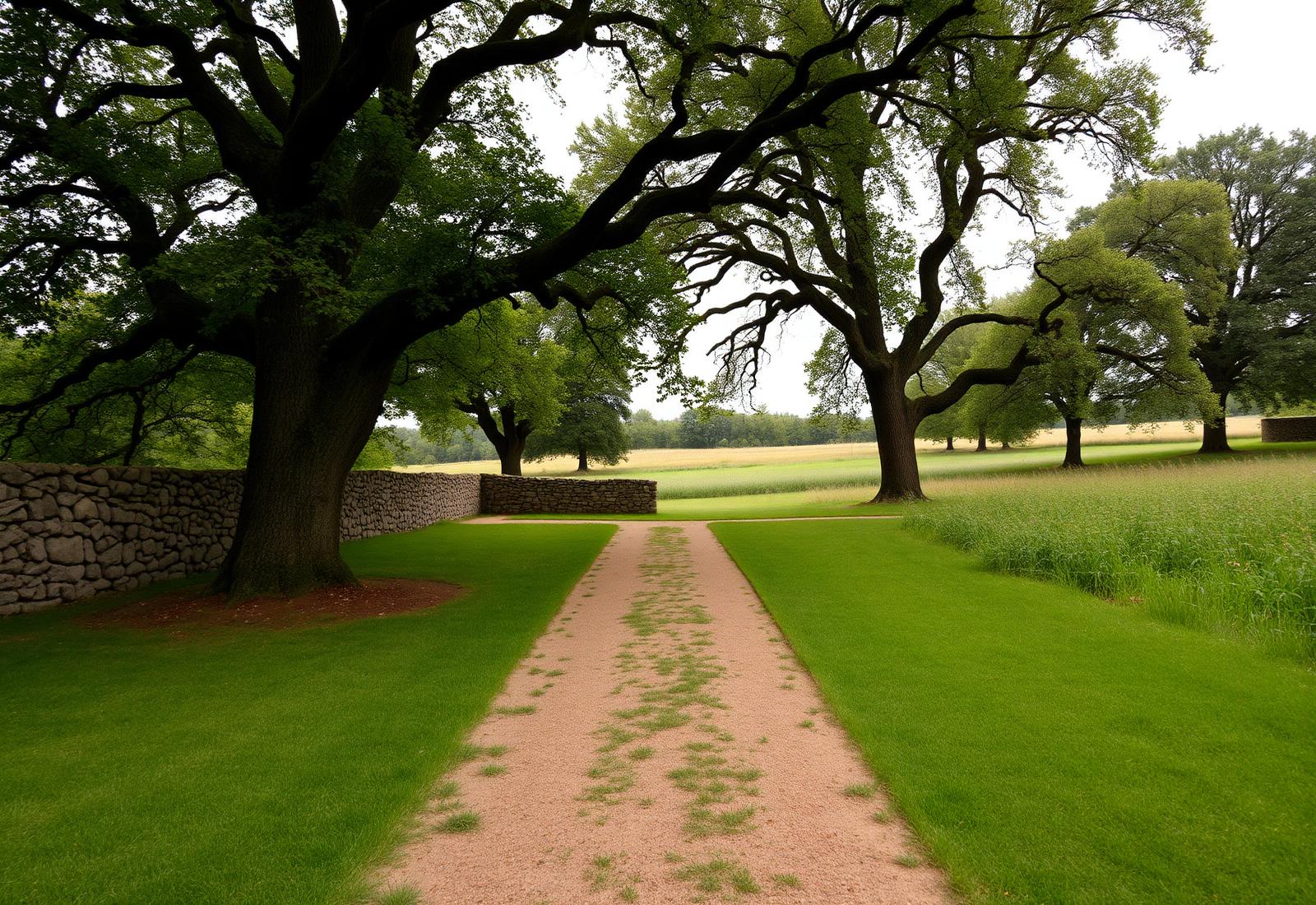
The six weeks between late September and early November decide how your garden survives the Galician winter. What to do about lawns, leaves, drainage, trees and tender plants — before the first Atlantic storms arrive.
Autumn arrives gently in Galicia and then all at once. September often still feels like summer; by late October the Atlantic fronts are queuing up and the rain can last for days. The window between the two is the most useful working period of the gardening year — the soil is still warm, growth is slowing, and everything you do now pays back in spring.
Lawns and grass
- Keep mowing while the grass grows, but raise the cut height for the last two mows — scalped grass going into a wet winter invites moss.
- Scarify to remove thatch and moss, then aerate compacted areas with a fork or aerator.
- Overseed bare patches now: September–October warmth plus Galician rain gives the best germination of the year.
- Apply an autumn lawn feed (low nitrogen, higher potassium) rather than a summer feed.
Leaves, beds and borders
Galicia's chestnuts, oaks and plane trees drop a lot of leaf. Left on lawns they kill grass; left in drains they cause floods; composted, they're the best soil improver you can get for free. Collect little and often, and shred before composting if you can.
- Cut back spent perennials, but leave seed heads on grasses and sturdy stems for structure and wildlife.
- Divide overgrown clumps of agapanthus, hosta and geranium — free plants for next year.
- Mulch beds 5–8 cm deep with compost or bark after clearing; it suppresses weeds and protects roots.
- Plant spring bulbs (daffodils, tulips, alliums) before the soil cools in November.
Drainage — the Galician essential
More gardens in Galicia fail from winter waterlogging than from any frost. Before the rains set in, walk the plot in a downpour if you can: note where water stands, where it runs against the house, and which terraces pond. Clear land drains, French drains and gullies, rod any slow downpipes, and consider a simple gravel soakaway trench where water habitually collects.
Trees, hedges and climbers
- Book any tree work now — crown reductions and dead-wood removal are far easier before winter storms load weak branches.
- Check trees close to the house for dead limbs, fungal brackets at the base, and lean that has increased over summer.
- Give hedges their final trim of the year so they go into winter tidy and dense.
- Tie in climbing plants (wisteria, roses, jasmine) and check pergola fixings — winter gales exploit anything loose.
Tender plants and the kitchen garden
Coastal Galicia is mild, but inland and higher plots do get hard frosts. Move potted citrus, bougainvillea and tender succulents under cover by late October. In the huerta, this is the month to plant garlic and broad beans, sow green manure on empty beds, and lift the last of the summer crops before the rain rots them.
If you're not there to do it
For second-home owners, autumn is the moment that separates a property that winters well from one that doesn't. A pre-winter visit covering drains, trees, leaves and tender plants — with photos — is the single most useful piece of maintenance you can commission before March.